
What Does It Mean for a Child to Read the Qur’an With Understanding?
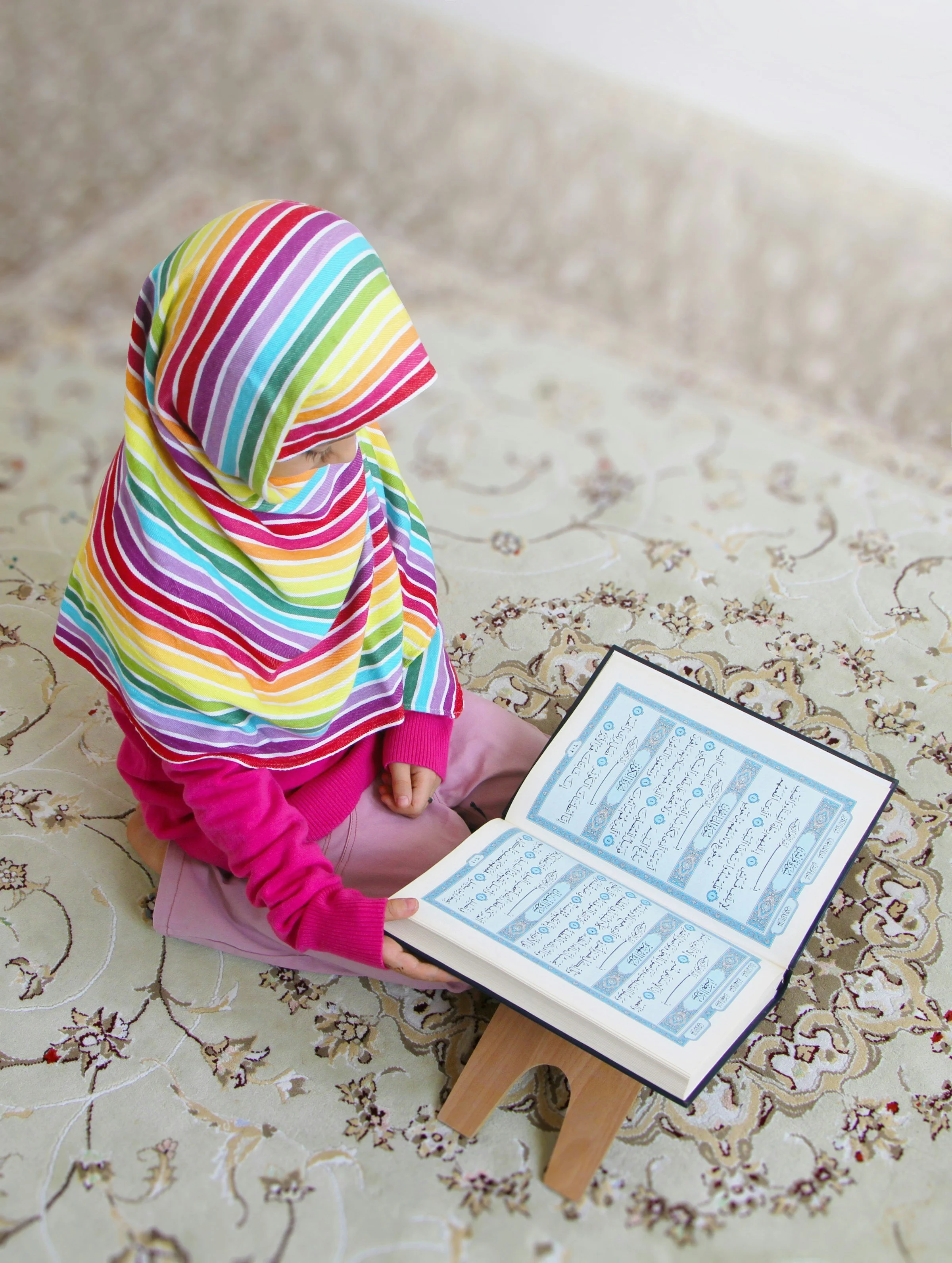
Many parents come to us with the same beautiful intention:
“I do not want my child to recite the Qur’an without knowing what it means. I want them to understand what Allah is saying.”
It is an aspiration shared by Muslim families around the world. We want the Qur’an to be more than words our children pronounce during a lesson. We want it to enter their hearts, shape their character, strengthen their faith, and guide the way they see the world.
But what does it actually mean for a child to read the Qur’an with understanding?
For children, understanding rarely begins with lengthy translations or advanced tafsīr. It develops gradually. It begins with the sound of the Qur’an becoming familiar, its letters becoming less intimidating, and its short sūrahs becoming part of the child’s memory and daily life.
Over time, familiar sounds become recognisable words. Words open the door to meanings. Meanings become stories, questions, lessons, and actions. What begins on the tongue slowly finds its way into the mind and heart.
Understanding the Qur’an Begins Before Knowing Arabic
It is easy to think of understanding as the ability to translate every āyah into English. Translation is certainly valuable, but it is only one part of a much larger relationship with the Qur’an.
A young child may not be able to translate Sūrah al-Fātiḥah word for word, yet they can begin to understand that it is a conversation with Allah: praising Him, asking Him for help, and seeking His guidance.
A child may not know the full explanation of Sūrah al-Fīl, but they can listen to its story and learn that Allah is powerful, protects what He wills, and is never overcome by those who appear stronger.
Before children understand every word, they begin to understand the Qur’an through:
Respect for the muṣḥaf
Familiarity with Qur’anic sounds and rhythms
Repetition of short sūrahs
Recognition of frequently occurring Arabic words
Stories connected to particular verses
Conversations about what Allah loves
A growing emotional attachment to recitation
This is sound and very real understanding, even when it is still at an early stage.
The goal is not to keep children at this stage forever. It is to recognise that a meaningful relationship with the Qur’an is built layer by layer.
The Stages of Qur’an Understanding for Children
Every child’s journey is different. Age, reading ability, previous exposure, temperament, and home environment all shape how quickly a child progresses.
Still, it can be helpful for parents to think of Qur’an understanding as a series of connected stages.
1. Sound and recognition
The earliest stage is learning to recognise Arabic letters, vowel markings, and sounds. Children begin distinguishing letters that may initially seem similar and learn how sounds join to form words.
At this stage, confidence matters. A child who is constantly afraid of making mistakes may become hesitant to read. Gentle correction and repeated listening help the sounds become familiar without making the child feel embarrassed.
The Qur’an first becomes something they can hear, recognise, and approach.
2. Fluent reading
Once the basic letters and sounds are secure, the child begins reading with greater ease. They no longer need to stop and decode every letter separately.
Fluency does not mean rushing. It means being able to follow the words with less strain and frustration. This gives the child the mental space to notice repeated vocabulary, listen to the beauty of a verse, and think about its meaning.
A child who is still devoting all their attention to decoding the script will naturally have less attention available for reflection. This is why fluent reading is not separate from understanding; it helps make deeper understanding possible.
3. Basic tajwīd awareness
Children can then begin learning that Qur’anic recitation has its own precision, rhythm, and care.
They learn where letters come from, how long particular sounds should be held, and how to pause appropriately. Tajwīd teaches a child that the words of Allah deserve attentiveness. We do not rush through them carelessly.
This stage should remain encouraging and age-appropriate. The purpose is not to make the child anxious about every error, but to develop careful listening, clearer pronunciation, and respect for correct recitation.
4. Recognising key Qur’anic vocabulary
Children do not need to master Arabic grammar before they can begin recognising meaning.
A small collection of recurring words can transform how they experience the Qur’an. Words such as:
Rabb - Lord and Sustainer
Raḥmah - mercy
Ṣabr - patience
Qalb - heart
Jannah - Paradise
Nār - Fire
Hudā - guidance
Āyah - sign or verse
When a child recognises a word in more than one sūrah, the Qur’an begins to feel less distant. They realise that these are not simply sounds they are repeating. They are words carrying messages they can begin to recognise.
Each new word becomes a small key.
5. Simple meanings and stories
Stories are among the most natural ways to help children engage with the Qur’an.
The stories of the prophets allow children to encounter courage, patience, repentance, gratitude, trust in Allah, and the consequences of different choices. A teacher or parent can connect an āyah to a story and then connect that story to the child’s own life.
A lesson about Prophet Yūsuf عليه السلام can become a conversation about jealousy, forgiveness, and trusting Allah through difficulty. A lesson about Prophet Nūḥ عليه السلام can introduce perseverance. A verse about kindness to parents can become a practical reminder about behaviour at home.
Meaning becomes memorable when children can see how it belongs in life.
6. Reflection and tarbiyah
The deepest purpose of understanding is not simply to collect information. It is to allow the Qur’an to guide the child.
Even young children can begin reflecting through simple questions:
What does this āyah teach us about Allah?
What does Allah love in this story?
What behaviour should we avoid?
What could we practise at home this week?
How can this verse help us when we feel afraid, angry, or sad?
These questions bring together Qur’an learning and tarbiyah. The child is not merely learning how to read a verse. They are beginning to ask how that verse should shape the person they become.
Why Children Should Not Be Rushed
A sincere desire for children to understand the Qur’an can sometimes lead parents to expect too much too soon.
We may want a child who is still struggling with basic letters to read fluently, memorise new passages, learn tajwīd rules, study vocabulary, and explain the meaning—all at once.
For some children, this turns Qur’an learning into an experience of constant inadequacy. No matter how hard they try, they feel behind.
A gentler path does not mean lowering the goal. It means building toward it in the right order.
Children need time to become comfortable with the Arabic script. They need repetition before words remain in their memory. They need to hear a meaning more than once before it becomes part of how they think. They need small successes that give them the confidence to continue.
Understanding grows through steady layering:
sound, recognition, fluency, vocabulary, meaning, reflection and practice.
Some of these stages will overlap. A beginner can still enjoy Qur’anic stories, and a fluent reader will continue refining pronunciation. The point is not to force every child into a rigid sequence, but to meet them at their present level and help them take the next meaningful step.
Love Creates the Ground for Understanding
Children are more receptive to meaning when they feel safe and happy in the learning process.
If Qur’an time is always associated with pressure, comparison, or fear of mistakes, the child may focus more on avoiding criticism than engaging with the words of Allah.
A positive experience does not mean that lessons have no structure or correction. Children need both. But correction can be calm, expectations can be realistic, and progress can be celebrated without demanding perfection.
A child who loves listening to the Qur’an will want to hear it again. A child who feels proud of reading a line correctly will be more willing to practise. A child who enjoys discovering the meaning of an Arabic word will begin looking for it elsewhere.
Love is not the final reward after learning. It is part of what makes learning possible.
How Parents Can Encourage Understanding at Home
Parents do not need to be Arabic teachers or scholars to support their child’s relationship with the Qur’an.
Simple habits can make a lasting difference.
Ask one meaningful question
After a lesson, ask something small:
What new word did you learn?
Which part did you enjoy reading?
What did the story teach you?
What is one thing you want to remember?
This shows the child that Qur’an learning is not only about completing pages.
Revisit familiar words
Choose one Qur’anic word and notice it together whenever it appears. A word such as raḥmah can lead to conversations about Allah’s mercy and how family members can show mercy to one another.
Connect verses to everyday life
When your child learns about gratitude, patience, truthfulness, or kindness, refer to that lesson gently during the week. This helps the Qur’an move beyond the classroom.
Keep practice short and consistent
A calm ten-minute routine is often more sustainable than a long session filled with frustration. Regular contact helps the Qur’an become a familiar part of family life.
Let your child see your relationship with the Qur’an
Children notice what their parents value. Reading, listening, reflecting, or even speaking warmly about the Qur’an teaches them that it is not merely another subject assigned to children.
How Sufuuf al-Khayr Builds the Journey From Reading to Meaning
At Sufuuf al-Khayr, we recognise that children do not all begin in the same place.
One child may need to strengthen letter recognition and pronunciation. Another may read fluently but require greater tajwīd accuracy. A third may be ready to develop Arabic vocabulary and comprehension.
Our learning pathways bring together several elements according to each child’s age and level:
Clear and carefully guided Qur’an recitation
Gradual tajwīd development
Arabic reading and vocabulary
Age-appropriate stories and meanings
Adab and character reminders
Gentle, personalised correction
Practical support for parents at home
Through structured learning and individual guidance, children can progress without being rushed or left behind. The aim is not simply to help them complete a textbook or reach the end of a sūrah. It is to help them become confident readers who gradually recognise, understand, and live by what they recite.
Understanding the Qur’an Is a Lifelong Journey
No child—or adult—reaches a point at which the Qur’an has nothing more to teach them.
We return to the same verses at different stages of life and discover meanings we had not noticed before. Our understanding deepens as our Arabic improves, our knowledge grows, and our experiences change.
Childhood is not the time to complete that journey. It is the time to begin it well.
When children learn to approach the Qur’an with confidence, reverence, curiosity, and love, they receive a foundation they can build upon for the rest of their lives.
The first goal may be recognising a letter. Then reading a word. Then understanding a familiar expression. Then reflecting on a story. Every stage matters.
What begins as sound on the tongue can, by the permission of Allah, become guidance carried in the heart.
Frequently Asked Questions
-
Your child does not need to master Arabic before learning basic meanings. Simple vocabulary and stories can be introduced from the beginning. However, learning Arabic alongside Qur’an gives children increasingly direct access to the words they recite.
-
Yes, children can learn stories, themes, and simple meanings while still developing their reading. At the same time, greater fluency makes it easier for them to focus on vocabulary and reflection without using all their attention to decode the letters.
-
Simple, reliable explanations can be introduced at any age when presented appropriately. Young children generally benefit from short explanations, stories, key lessons, and practical applications rather than lengthy technical discussions.
-
Begin with recurring Qur’anic words, short sūrahs, and meanings connected to daily life. An age-appropriate Arabic program can then help the child move gradually from translation toward more direct understanding.
-
Look at several areas: letter recognition, reading fluency, pronunciation, tajwīd, vocabulary, confidence, and engagement. A placement consultation with an experienced teacher can help identify the child’s strengths and the most appropriate next step.
Find the Right Starting Point for Your Child
Would you like your child to move from simply pronouncing the words of the Qur’an toward reading them with confidence, recognition, and growing understanding?
Sufuuf al-Khayr offers personalised online Qur’an and Arabic learning for children, with pathways shaped around each learner’s age, current ability, and goals.
Book a free consultation, and we will help you identify the most suitable starting point—whether your child needs support with letters, fluency, tajwīd, Arabic vocabulary, memorisation, or meaning.